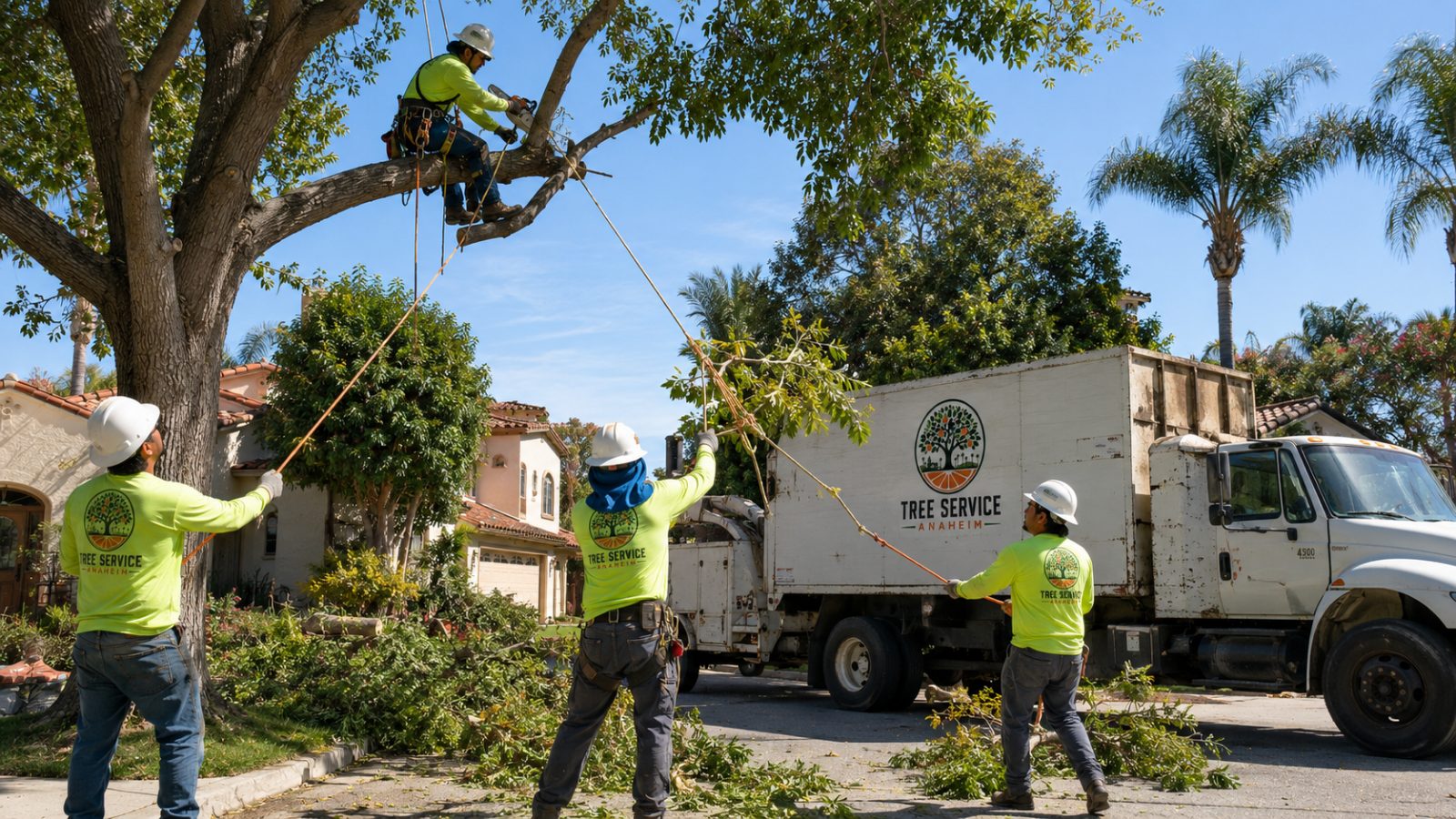
Urgent help for dangerous tree situations
Emergency Tree Removal in Anaheim
For urgent tree damage, call and describe what has fallen, shifted, or become unstable. Call (714) 786-3832
Urgent help for dangerous tree situations
For urgent tree damage, call and describe what has fallen, shifted, or become unstable. Call (714) 786-3832
A tree emergency can involve a whole tree on a roof, a split trunk leaning toward a structure, a heavy limb blocking a driveway, storm damage hanging over a walkway, or a tree that has suddenly shifted at the roots. The first priority is keeping people away from the hazard and understanding what else may be involved.
We provide emergency tree removal and urgent tree debris response in Anaheim and nearby Orange County communities. If a tree is contacting power lines, creating a roadway emergency, or presenting an immediate threat to people, contact the appropriate utility or emergency authority before approaching the area.
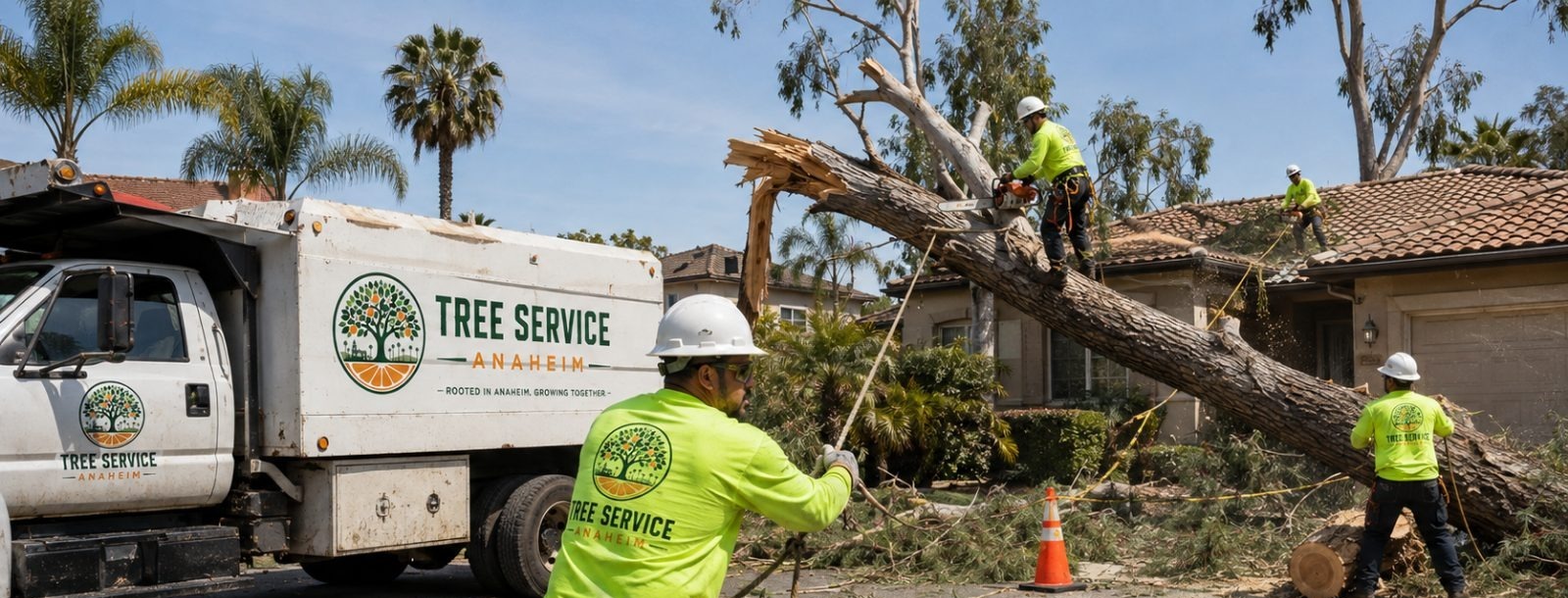
Storm-damaged and partially failed trees behave differently from standing trees in normal conditions. Limbs can be suspended under tension, trunks may be split, root plates can shift, and damaged sections can move when weight is removed. That is why emergency removal should be approached as a changing hazard rather than ordinary cleanup. When we evaluate urgent work, we consider what has already failed, what remains supported, whether structures or utilities are involved, where crew members can work safely, and what needs to be removed first to reduce the immediate risk. The goal is to stabilize the situation through a deliberate sequence rather than rushing into the most visible piece of debris.
A fallen tree can block access, damage structures, crush landscaping, or place weight against walls, fences, roofs, and vehicles. Removal is planned around how the tree is resting and what may move when sections are cut.
Large broken limbs can remain hung in the canopy or partially supported by roofs and neighboring branches. These situations require careful attention to tension, balance, and the area below.
A trunk that has split or opened after wind or structural failure may lose stability quickly. We evaluate the remaining support before deciding how to reduce or remove the tree.
When trees or major limbs block a driveway, private road, parking area, gate, or building entrance, clearing safe access may be the first practical priority.
Wind and rain can expose weak unions, decay, root problems, and overloaded limbs. We focus first on the damaged portions that create the most immediate concern.
Trees resting on roofs, garages, patio covers, sheds, or other structures may transfer weight in unexpected ways. Removal sequencing needs to account for both the tree and the damaged structure.
| Service | Estimated Cost | Average |
|---|---|---|
| Urgent limb removal | $500–$1,500 | $900 |
| Fallen small or medium tree | $900–$2,500 | $1,600 |
| Large emergency removal | $1,800–$5,000+ | $3,000 |
| Complex tree on structure | $2,500–$7,500+ | $4,500 |
Emergency pricing can vary widely because access, time of response, tree position, structural damage, equipment needs, hazard level, and debris volume affect the work. These figures are general planning ranges only.
Emergency work is sequenced around what is most likely to move, fall, block access, or cause additional damage.
Broken trees can contain compression, tension, and unsupported weight that make ordinary cutting methods unsafe.
We explain what we are seeing and what the first practical objective should be so you are not guessing about the next step.
Once the immediate hazard is controlled, debris handling can be completed according to the agreed emergency work scope.
If a tree has fallen, split, shifted, or become unstable, keep people clear and call to describe the situation. Call (714) 786-3832.
Free — no obligations
We determine whether people, structures, access routes, utilities, vehicles, or neighboring property are exposed to continuing movement or falling material.
The first cuts are chosen to reduce risk while avoiding sudden shifts in suspended or partially supported sections.
Damaged limbs, trunk sections, or the remaining tree are handled in a controlled order suited to the site.
After the immediate hazard is addressed, the work area is cleared according to the project scope so the property can move toward normal use.