Planned removal for difficult trees
Tree Removal in Anaheim, CA
Show us the tree and the surrounding property to start planning your removal. Get a Free Estimate
Planned removal for difficult trees
Show us the tree and the surrounding property to start planning your removal. Get a Free Estimate
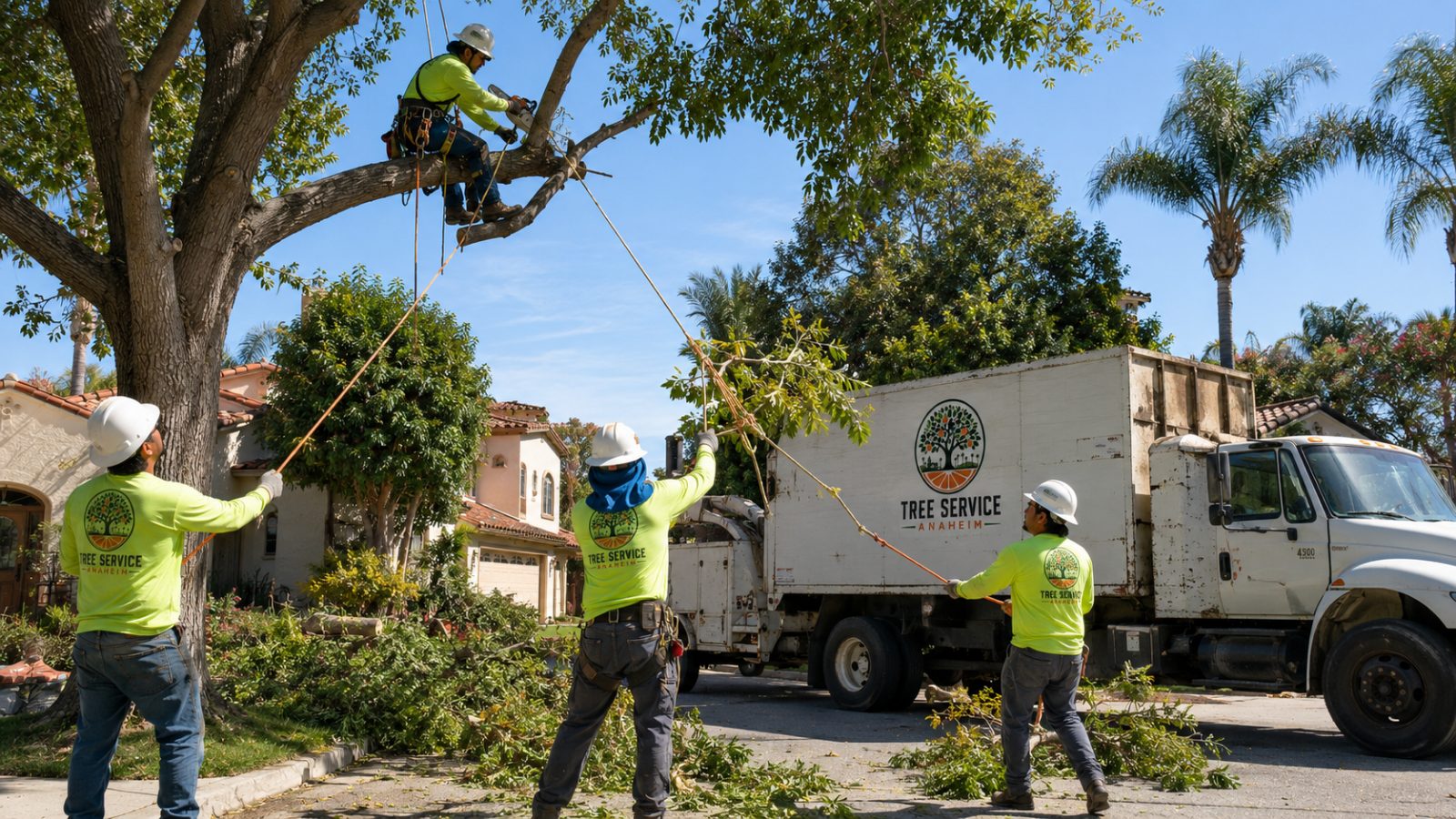
Tree removal is often less about cutting a tree down and more about controlling where every part of it goes. On Anaheim-area properties, trees may stand beside roofs, walls, driveways, pools, utility lines, landscaping, patios, neighboring yards, or narrow access routes. The safest practical method depends on all of those conditions.
We remove trees that are dead, badly damaged, unwanted, interfering with property plans, or located where ongoing conflicts make removal the sensible choice. Before work begins, we consider the tree, access, available drop space, nearby property, and how debris will be handled.
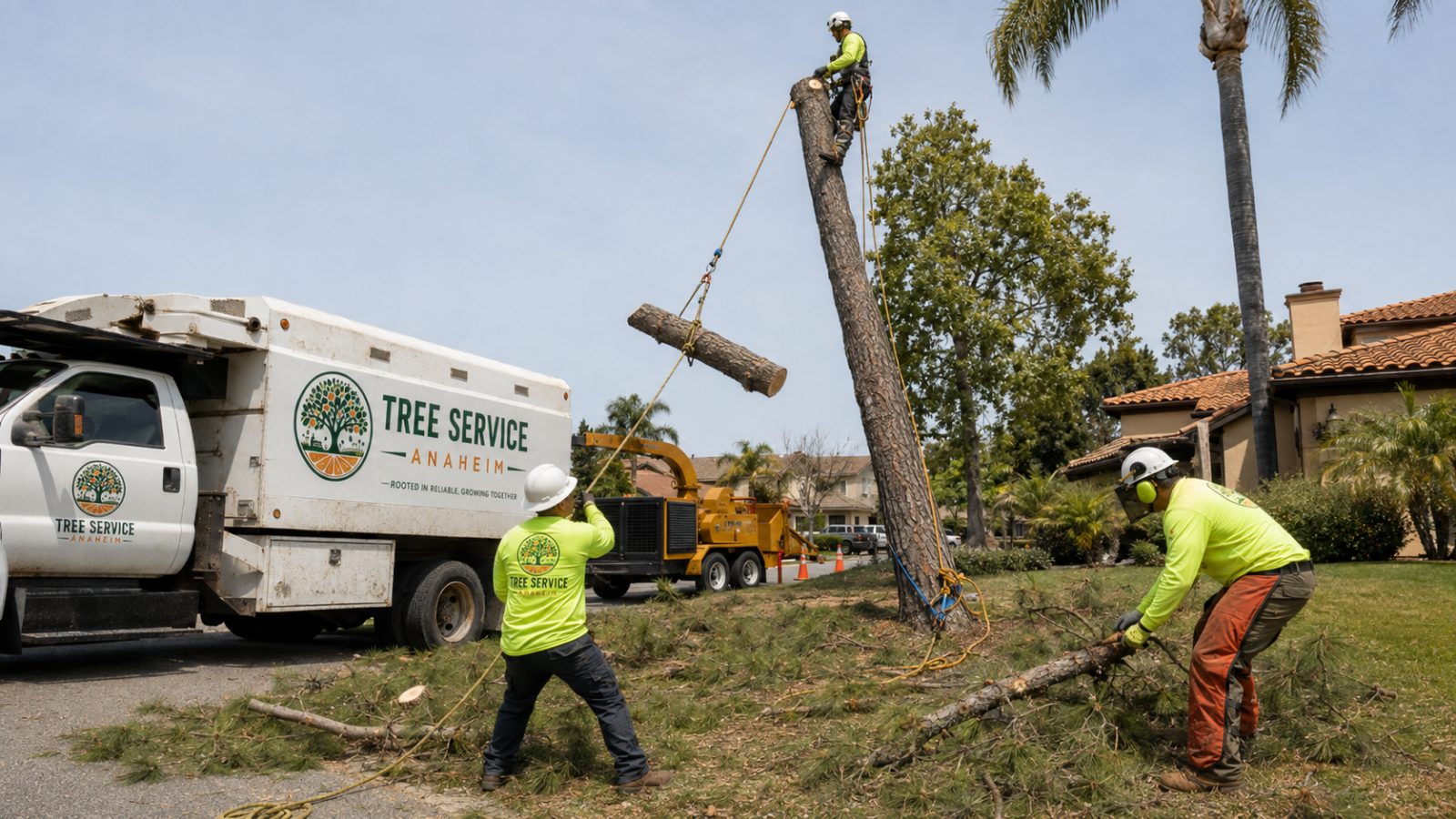
Some trees can be removed in large sections when there is open space. Others need to be dismantled gradually, with limbs and trunk sections controlled to avoid nearby structures or landscaping. Height alone does not determine difficulty. A moderate tree in a tight backyard can require more planning than a taller tree in an open area. We also look at what happens after the canopy is down. Trunk sections can be heavy, debris can quickly fill a small work area, and access may determine what equipment can be used. Customers should understand what material will be removed, what will remain, and whether stump work is part of the planned scope before the job starts.
Dead trees can become increasingly unpredictable as wood dries, decays, or loses structural strength. Removal planning accounts for brittle limbs, weakened trunks, and the areas beneath and around the canopy.
Homes often leave little room for uncontrolled dropping. We plan around roofs, patios, block walls, fences, pools, garden areas, parked vehicles, neighboring property, and limited side-yard access.
Large trees create heavier loads and more debris, so section size, equipment placement, landing areas, and ground coordination become increasingly important as the work progresses.
When equipment cannot easily reach the tree, the removal method must fit the available pathways and work zone. Narrow gates, slopes, landscaping, and backyard locations can all affect the plan.
Trees beside houses, garages, walls, sheds, commercial buildings, and other structures generally require more controlled dismantling than trees with open space around them.
A healthy tree may still conflict with renovation plans, hardscape, recurring maintenance, usable yard space, or the long-term goals for a property. We can discuss whether removal fits those goals.
| Service | Estimated Cost | Average |
|---|---|---|
| Small tree removal | $400–$1,000 | $700 |
| Medium tree removal | $800–$2,000 | $1,350 |
| Large tree removal | $1,500–$4,500+ | $2,750 |
| Tight-access or complex removal | $1,800–$5,500+ | $3,200 |
These are general planning ranges, not quotes. Tree size, species, condition, access, nearby structures, equipment needs, disposal volume, and site complexity can change the final price substantially.
Many Anaheim properties do not offer a wide-open drop zone. We choose section sizes and work methods based on the actual space around the tree.
The work plan considers roofs, walls, fences, landscaping, utilities, vehicles, and neighboring areas before cutting begins.
Customers should know what is being removed, how debris will be handled, and what is or is not included in the project.
We regularly encounter dense residential lots, palms, mature shade trees, narrow access, slopes, and other conditions common around Orange County.
If a tree needs to come down, start with a clear look at the tree, access, and surrounding property. Request a free estimate online.
Free — no obligations
We look at tree size, condition, lean, canopy spread, access, nearby structures, utilities, landscaping, and available landing areas.
The tree may be removed in larger sections or dismantled progressively depending on the amount of control the site requires.
The crew coordinates cutting, lowering, landing zones, ground handling, and equipment movement around the property.
Branches and trunk material are managed according to the agreed scope, and the active work zone is cleaned before completion.