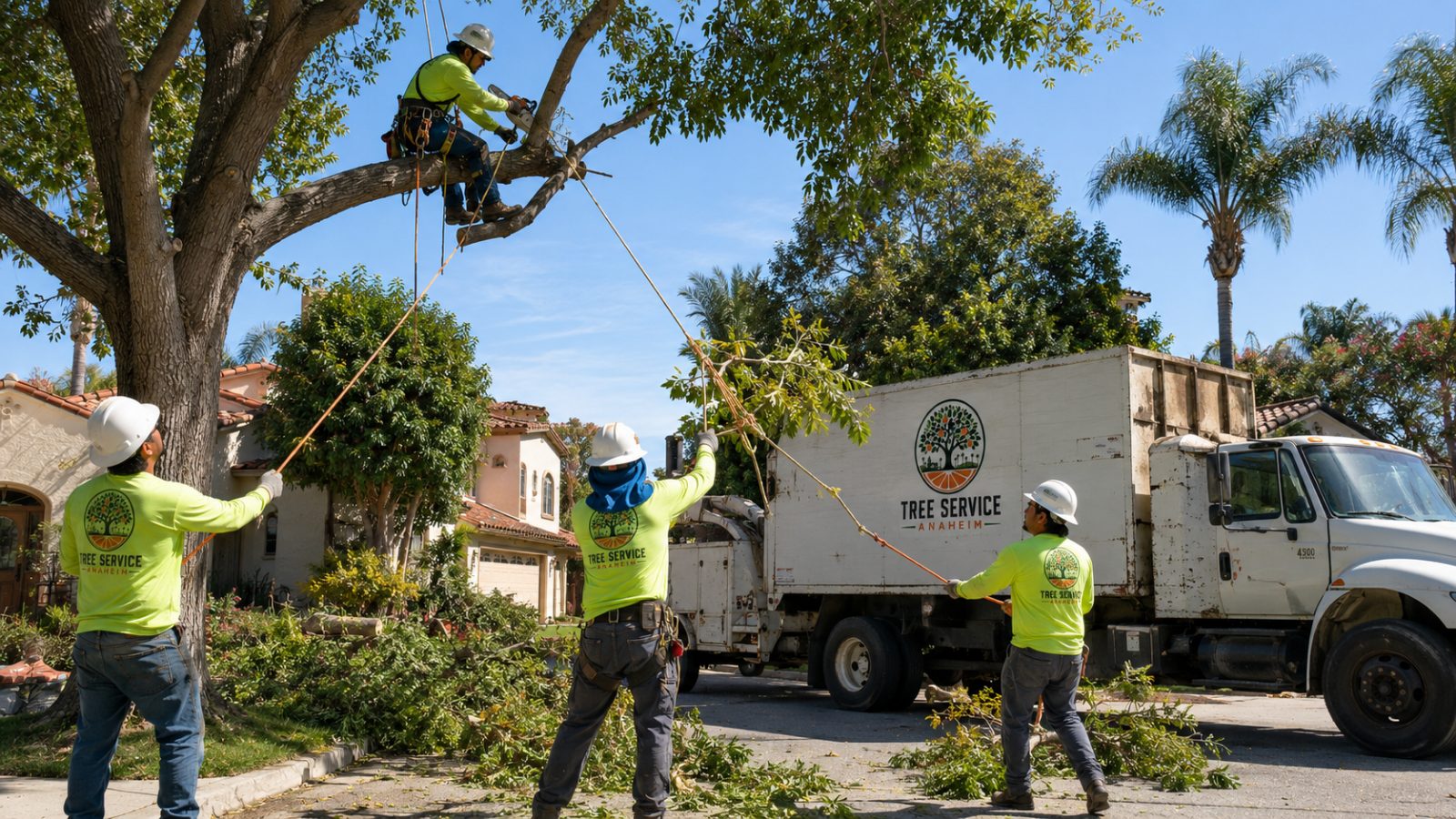
Address risky trees before they fail
Hazardous Tree Removal in Anaheim
Worried about a tree near your home or property? Start with a site review. Get a Free Estimate
Address risky trees before they fail
Worried about a tree near your home or property? Start with a site review. Get a Free Estimate
A hazardous tree is not simply a large tree or a tree that looks unusual. Risk comes from the combination of tree condition and what could be struck if the tree or part of it fails. Dead sections, major cracks, severe lean, decay, root disturbance, split unions, storm damage, and declining structure can all become more important when a house, driveway, play area, parking space, walkway, or neighboring property sits within reach.
We remove hazardous trees when the condition and location make removal the practical option. The work plan is built around the same hazards that made the tree a concern in the first place.
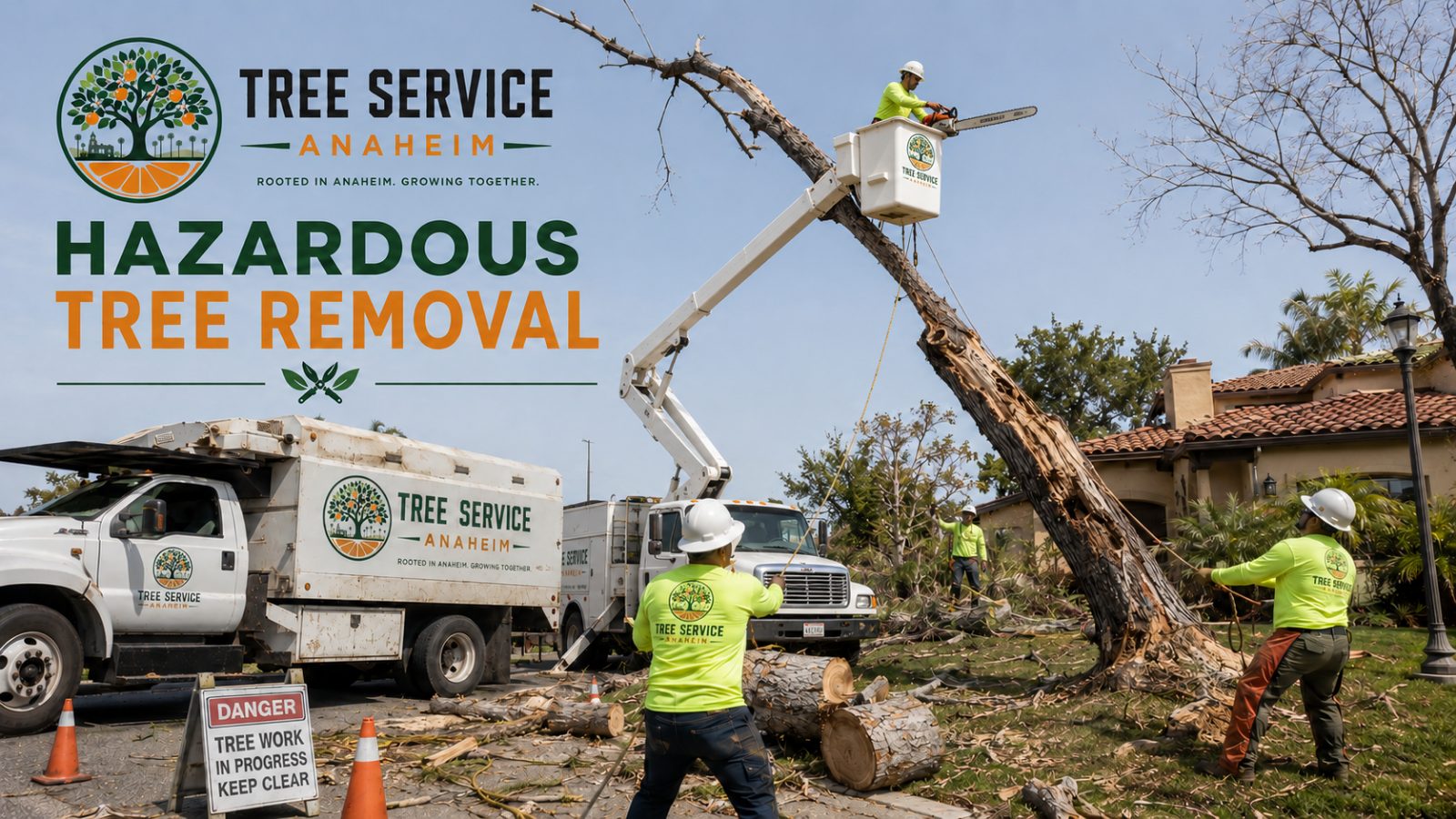
Tree risk is site-specific. A defect in a tree over an unused open area may carry a different consequence than the same defect over a bedroom, parking area, sidewalk, or busy entrance. That is why the condition of the tree and the targets beneath it both matter when deciding how urgently a problem should be addressed. Removal can also become more difficult as deterioration progresses. Dead branches may become brittle, cavities can weaken trunk sections, root loss can reduce stability, and split leaders may carry unpredictable loads. When removal is chosen, we plan for those weaknesses rather than assuming the tree will respond like healthy wood.
A dead or rapidly declining tree can shed limbs and lose structural strength over time. The location of the tree and the condition of the remaining wood help determine the removal approach.
Not every leaning tree is hazardous, but a recent increase in lean, soil movement, exposed roots, or a lean toward a high-value target can be cause for concern.
Major cracks, split unions, and separating stems can indicate reduced structural support. These defects become particularly important where heavy sections extend over occupied areas or structures.
Visible cavities, fungal activity, internal decay, and hollow sections can reduce load-bearing wood. The significance depends on location, extent, and the forces acting on the tree.
Construction, trenching, slope movement, saturated soil, erosion, root cutting, and root plate lifting can affect stability even when the upper canopy still appears green.
Trees with structural concerns deserve greater attention when they can reach homes, garages, commercial buildings, utility areas, parking spaces, or neighboring property.
| Service | Estimated Cost | Average |
|---|---|---|
| Small hazardous tree | $500–$1,200 | $800 |
| Medium hazardous tree | $900–$2,400 | $1,500 |
| Large hazardous tree | $1,800–$5,000+ | $3,000 |
| Complex compromised tree | $2,500–$7,000+ | $4,200 |
Condition can affect price as much as size. Brittle wood, severe decay, difficult access, nearby structures, equipment limitations, and the need for highly controlled dismantling can increase complexity. These are general planning ranges only.
We pay attention to both the condition of the tree and the people, structures, vehicles, and access areas within its potential fall zone.
Compromised trees may not tolerate the same climbing, loading, or cutting approach as sound trees, so the method has to fit the condition.
We explain visible concerns in practical language and focus on the work needed to address the problem rather than using fear to sell the project.
Hazardous trees are often concerning precisely because valuable property is nearby. That surrounding area is central to the removal plan.
If a tree is leaning, cracking, declining, or showing signs of structural trouble, have the situation reviewed before conditions worsen. Request a free estimate online.
Free — no obligations
We look at visible defects, tree position, recent changes, surrounding targets, and access to understand why the tree is considered hazardous.
The removal sequence accounts for dead wood, cracks, decay, lean, root issues, or other conditions that may affect stability.
Sections are removed using a method suited to the available space and the structural condition of the tree.
Tree material is handled according to the agreed scope and the immediate work area is left orderly after removal.