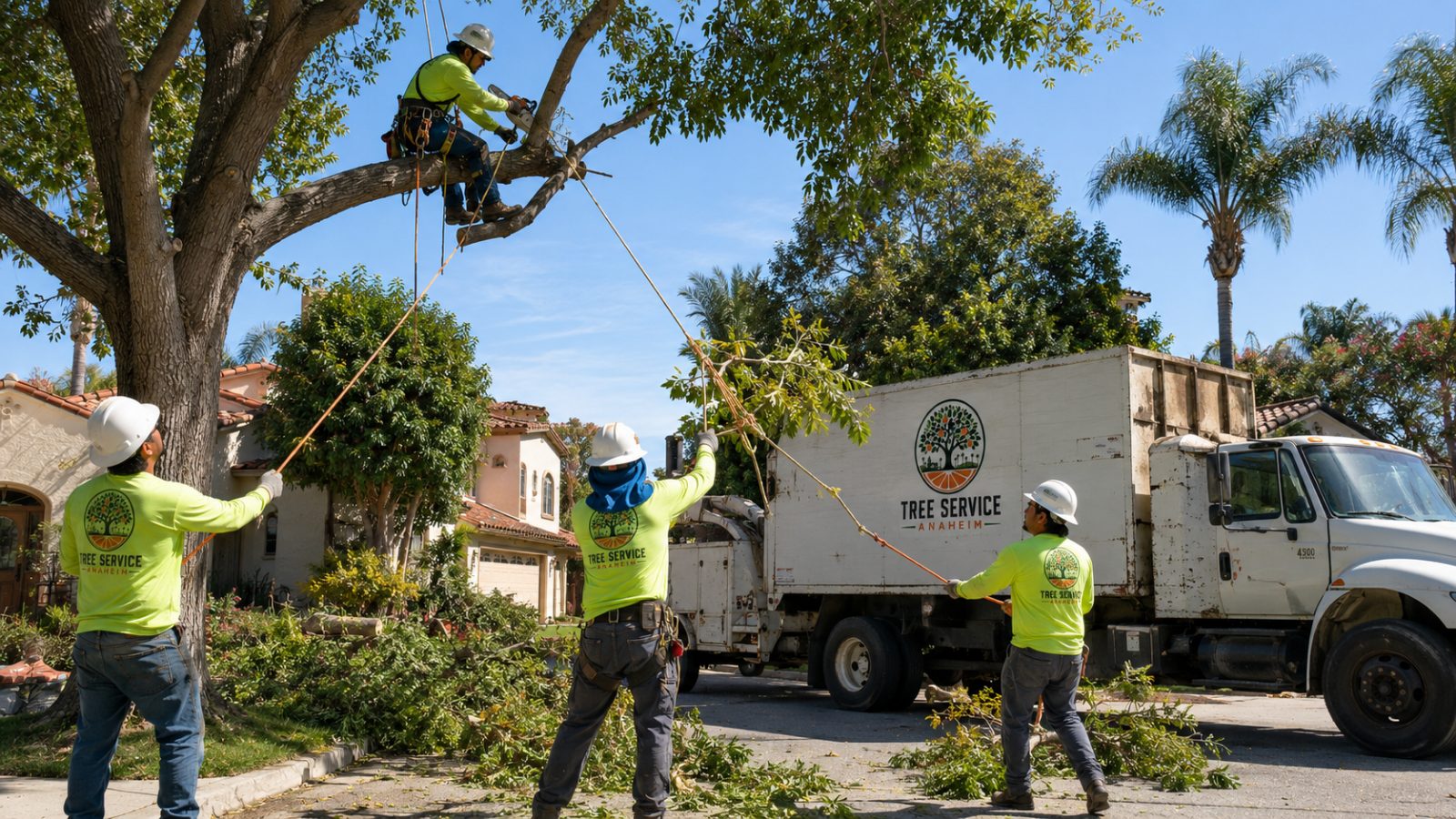
Removal planned for Southern California palms
Palm Tree Removal in Anaheim
Need a palm removed? Tell us its location, height, and what surrounds it. Get a Free Estimate
Removal planned for Southern California palms
Need a palm removed? Tell us its location, height, and what surrounds it. Get a Free Estimate
Palms are a familiar part of Orange County landscapes, but removing one is not the same as removing a broad-canopy tree. Tall straight trunks, dense crowns, heavy frond bases, fibrous material, limited drop zones, and palms planted close to pools, walls, roofs, driveways, and neighboring property all affect how the work should be approached.
We remove palms that are dead, declining, storm-damaged, unwanted, interfering with property plans, or simply no longer practical for the site. The removal method depends on the palm, its height, available access, and the property below.
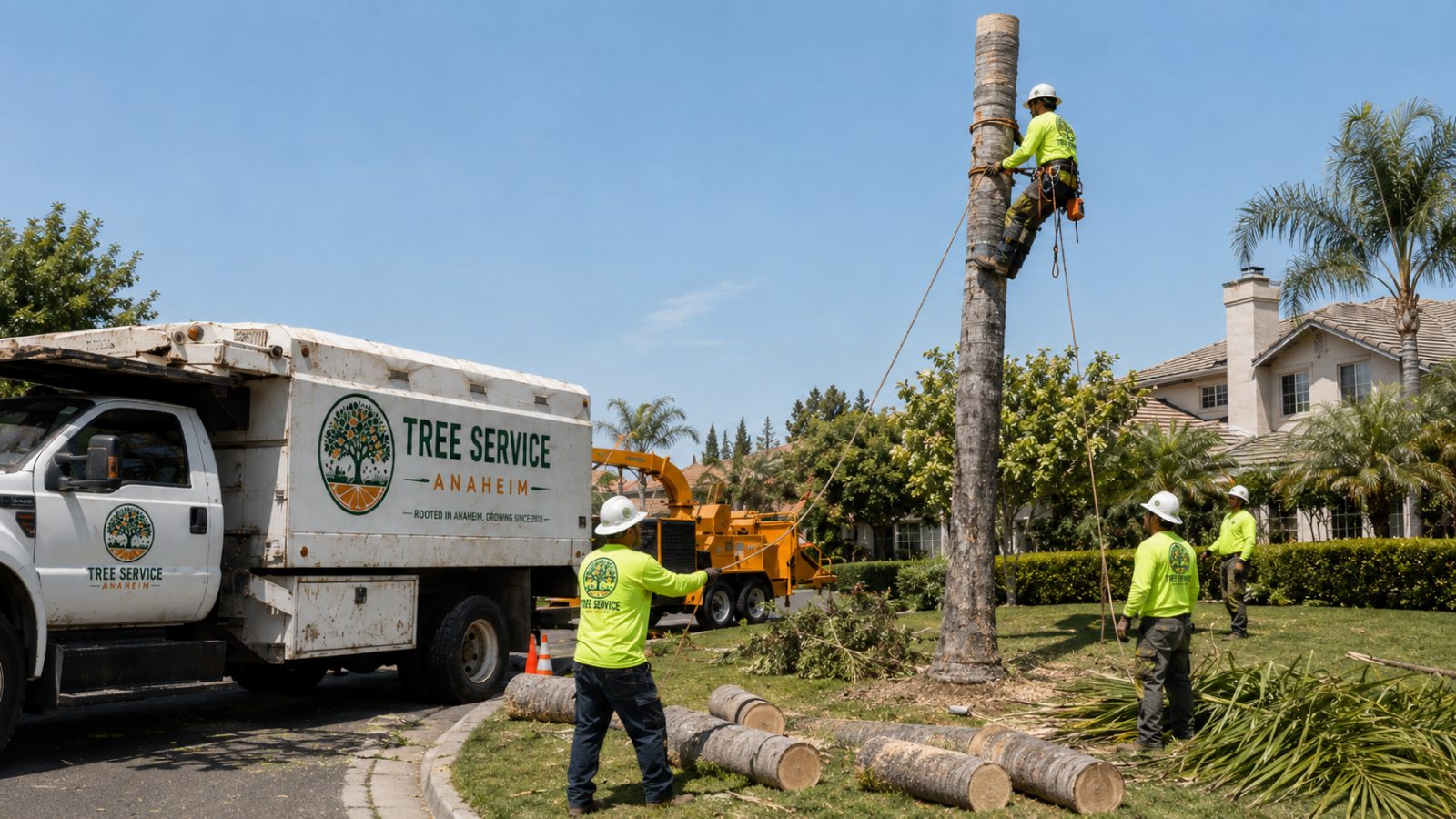
From the ground, a palm can appear simple because it has one main trunk and a crown at the top. In practice, the weight concentrated in that crown and the long vertical trunk can make uncontrolled dropping impractical on smaller properties. Heavy fronds, seed structures, old skirt material, and trunk sections all need predictable landing areas. Access matters as well. Palms are frequently planted beside pools, narrow side yards, walls, garages, patios, and front entries where equipment placement is limited. We plan the removal around those constraints and explain how the crown, trunk, and debris will be handled.
Height increases the distance material must be controlled and can limit how much of the palm can be removed at once. Tall palms are generally dismantled according to the space and access available.
Dead palms can develop loose crown material and weakened tissue. Their condition is considered when deciding how the palm can be accessed and sectioned.
Pools, decks, equipment, glass fencing, hardscape, and limited working room can make palm removal more sensitive. Protecting the surrounding area becomes a central part of the plan.
Palms planted close to roofs, eaves, walls, patios, garages, and neighboring structures usually require controlled sectioning rather than a simple ground-level cut.
Wind can loosen fronds, damage crowns, and expose weakness that was not obvious beforehand. We focus on the condition of the remaining crown and trunk before removal begins.
Property owners may remove palms because of recurring debris, maintenance demands, renovation plans, blocked views, crowding, or a change in landscape design.
| Service | Estimated Cost | Average |
|---|---|---|
| Small palm removal | $300–$800 | $500 |
| Medium palm removal | $600–$1,500 | $950 |
| Tall palm removal | $1,000–$2,800+ | $1,700 |
| Complex palm near structures | $1,500–$4,000+ | $2,400 |
Palm height, trunk diameter, crown condition, access, nearby pools or structures, equipment needs, and debris handling all affect final pricing. These figures are general planning ranges only.
We account for the concentrated crown weight, fibrous trunk material, fronds, and vertical working space that make palms different from broad-canopy trees.
Many palms stand where dropped material could damage decks, coping, walls, roofs, or other finished surfaces, so landing zones matter.
The size of trunk sections is chosen according to the palm, height, available space, and how the material can be handled on the ground.
Palm material is bulky and fibrous. We discuss cleanup and removal expectations as part of the project rather than treating debris as an afterthought.
For a palm removal estimate, tell us where the palm stands and what is directly around it. Request a free estimate online.
Free — no obligations
We look at height, crown condition, trunk position, access, structures, pools, utilities, landscaping, and available working space.
Fronds and crown material are handled in a sequence designed for the palm and the property beneath it.
The remaining trunk is removed in manageable sections or by another appropriate method based on access and landing space.
Fronds, crown material, and trunk sections are managed according to the agreed project scope and the work area is cleaned.